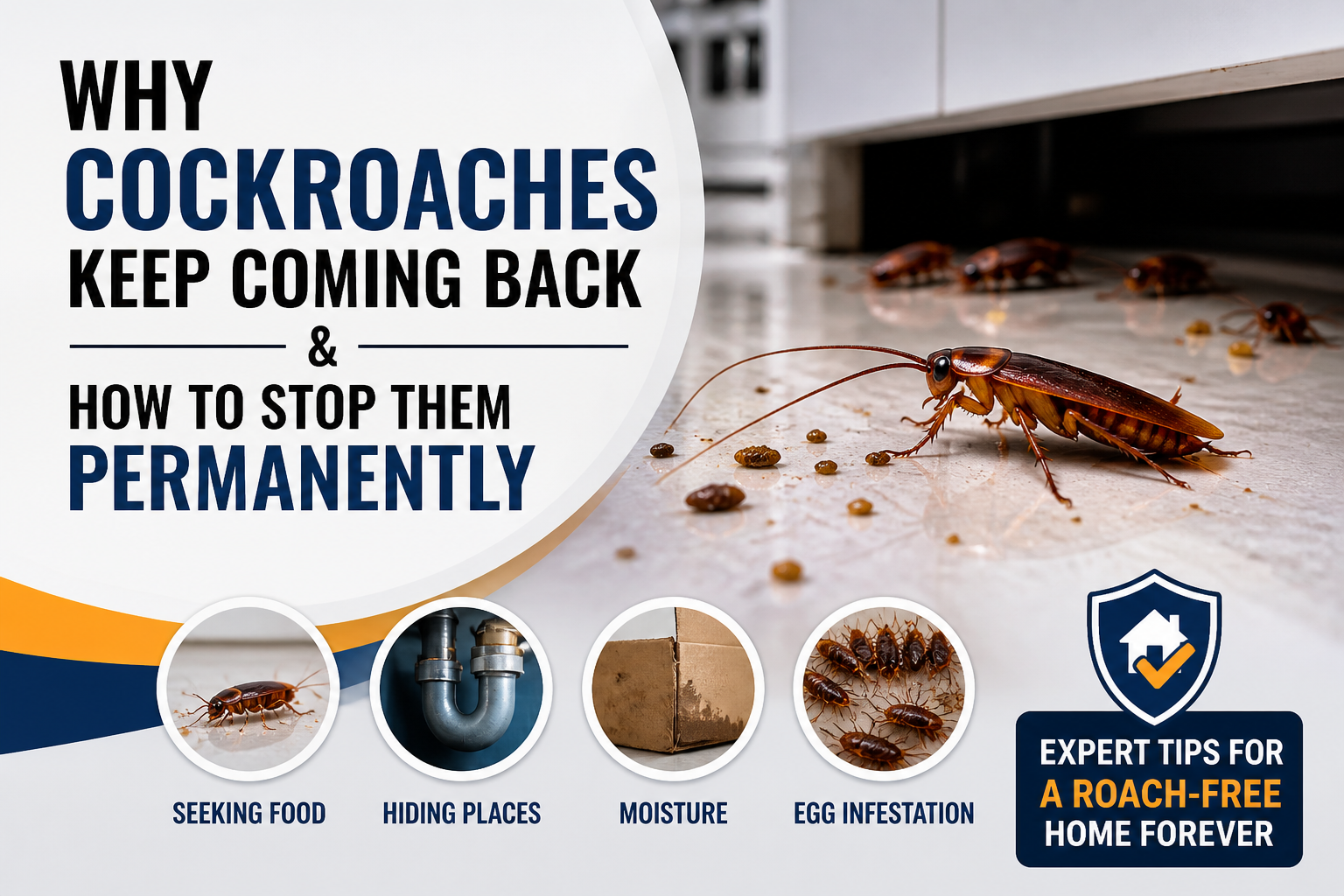
You’ve sprayed, cleaned, and set traps — and yet they return. Cockroaches are among the most persistent household pests in India, and understanding why they keep coming back is the first step to getting rid of them for good.
At Prime Pest Controls, we’ve treated thousands of homes and businesses facing repeat cockroach infestations. This guide breaks down the real reasons these pests survive, and the proven methods to eliminate them permanently.
Why Cockroaches Are So Hard to Eliminate
Cockroaches have survived for over 300 million years. Their biology is built for resilience — they can survive without food for a month, tolerate many common insecticides, and reproduce at alarming speeds. One female German cockroach can produce up to 300 offspring in her lifetime.
01.Hidden Harborages
Roaches nest deep inside walls, behind appliances, and in electrical boxes — places sprays never reach.
02.Rapid Reproduction
Even after 90% are killed, the remaining colony can fully recover in weeks without treatment.
03.Pesticide Resistance
Many roach populations in India have developed resistance to common over-the-counter sprays.
04.Moisture & Food Sources
Even tiny crumbs, pipe leaks, or damp corners give cockroaches everything they need to survive.
The 5 Most Common Reasons They Return to Your Home
1. You’re treating symptoms, not the source
Spraying visible cockroaches only kills a fraction of the colony. The egg cases (oothecae) hidden deep in crevices remain untouched. When those eggs hatch — typically in 28–40 days — the infestation starts fresh. Effective treatment must target harborage zones and breeding sites, not just active insects.
2. Moisture problems are left unaddressed
Cockroaches are drawn to water more than food. Leaking pipes under sinks, condensation around AC units, and damp bathroom walls create ideal habitats. Until moisture is controlled, cockroaches will keep returning regardless of how much pesticide is applied.
3. Entry points remain open
Cockroaches enter through gaps in door frames, cracked tiles, drainage pipes, electrical conduits, and even second-hand furniture. If these entry points aren’t sealed, new cockroaches will move in from neighbouring units or outdoors continuously.
4. Over-the-counter products are inadequate
Consumer sprays are surface-only treatments. They lack the residual power and active ingredient concentrations used in professional-grade formulations. Many Indian cockroach populations — particularly the German cockroach — have developed measurable resistance to pyrethroid-based sprays commonly sold in stores.
5. Incomplete follow-up treatments
Professional cockroach treatment is not a one-visit job. A single treatment kills active adults but not newly hatched nymphs. A structured 2–3 visit programme spaced 3–4 weeks apart is essential to break the reproductive cycle completely.
Pro tip from our team
Gel bait is one of the most effective weapons against cockroaches. Applied in tiny dots inside cabinets, behind appliances, and along plumbing lines, it draws cockroaches out from hiding and eliminates the entire colony through secondary kill when infected roaches return to the nest.
How to Stop Cockroaches Permanently — Step by Step
-
Conduct a thorough inspection
Identify all active harborage zones — behind the fridge, under the stove, inside electrical panels, and along plumbing pipes. Use a torch and look for egg cases, droppings, and shed skins.
-
Eliminate moisture and food sources
Fix all leaking pipes immediately. Store food in airtight containers. Clean behind appliances regularly and empty bins daily. Wipe down surfaces before bed each night.
-
Seal all entry points
Use silicone caulk to seal gaps around pipes, tiles, door frames, and cable entry points. Install mesh covers on drainage outlets. Check second-hand furniture for egg cases before bringing it indoors.
-
Apply professional-grade treatment
Engage a licensed pest control service for gel bait application, residual spray in harborage zones, and insect growth regulator (IGR) treatment to prevent egg hatching.
-
Follow up at 3–4 week intervals
Return visits catch newly hatched nymphs before they reach breeding age. Two to three visits are typically required for complete elimination of an established infestation.
-
Maintain with preventive treatment
Annual or bi-annual preventive treatments keep your home protected, especially in apartments and dense urban areas where cockroaches can migrate from neighbouring units.
Related guides on our siteCockroach Pest Control Services
Termite Control Treatment
Bed Bug Solution
Rat Pest Control
Mosquito Pest Control Services
Sterilization Services
When to Call a Professional Pest Control Service
DIY methods may reduce visible activity temporarily, but they rarely eliminate an established infestation. You should contact a professional if:
- You spot cockroaches during the day (a sign of heavy infestation)
- You’ve used sprays multiple times with no lasting results
- There’s a persistent musty or oily smell in your kitchen or bathroom
- You find egg cases or large numbers of droppings behind appliances
- You live in a flat complex where neighbours have cockroach issues
Prime Pest Controls offers a comprehensive cockroach treatment programme using commercial-grade gel baits, residual sprays, and insect growth regulators — the same products and techniques used in hotels, hospitals, and food service facilities.
Frequently Asked Questions