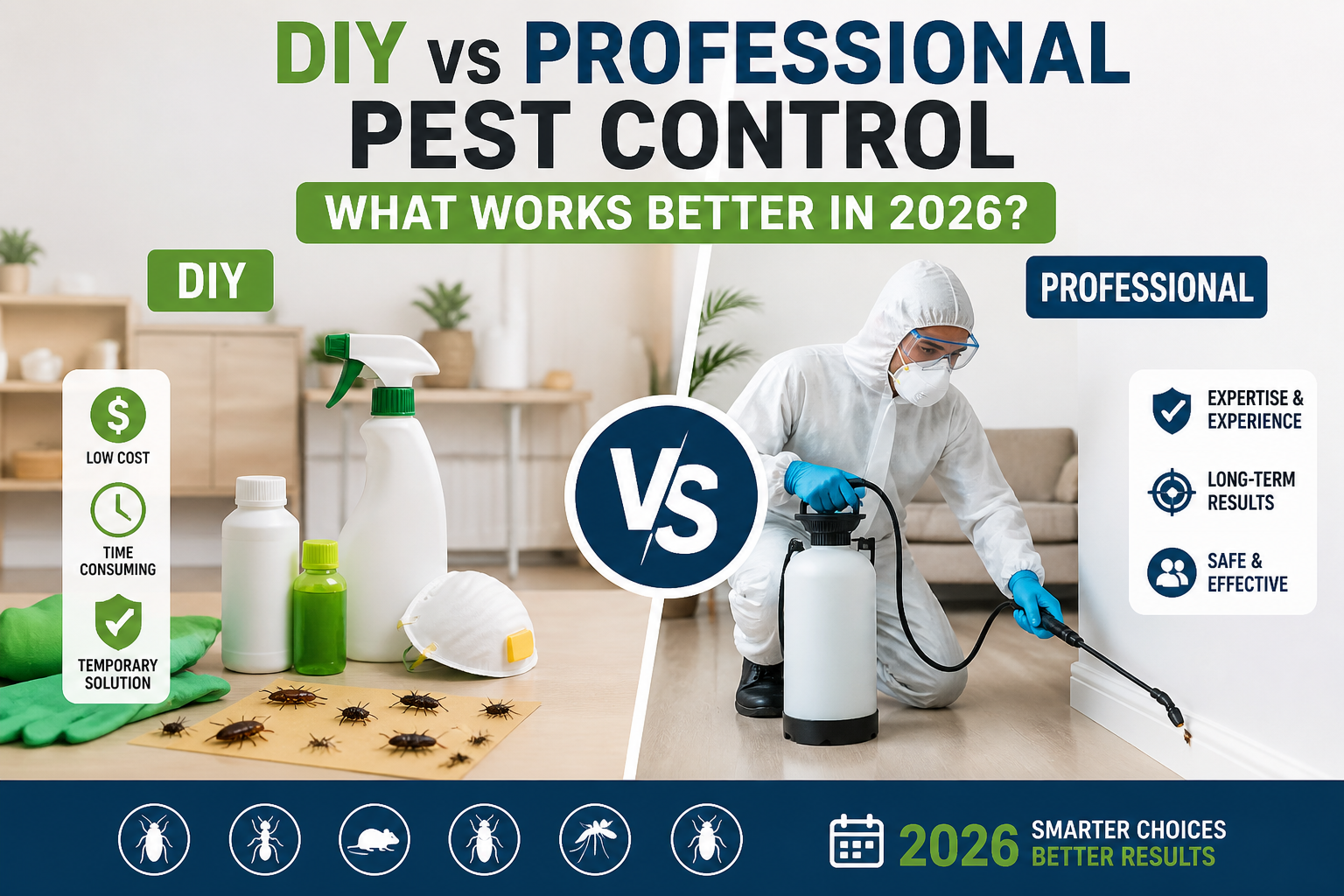
If you’ve ever spotted a line of ants marching across your kitchen counter or noticed droppings near your pantry, you know that sinking feeling. Your first instinct might be to grab a can of spray from the hardware store and handle it yourself. But is that really the best move?
In 2026, homeowners have more pest control options than ever — from advanced DIY kits to tech-driven professional services. So how do you decide which approach is right for your situation? Let’s break it down honestly.
What Is DIY Pest Control?
DIY pest control means tackling infestations on your own using store-bought products, home remedies, or online guides. Common options include:
- Spray insecticides and baits for ants, roaches, and spiders
- Snap traps and glue boards for rodents
- Natural deterrents like diatomaceous earth, essential oils, and vinegar solutions
- Ultrasonic pest repellers
These solutions are widely available, relatively affordable, and can feel satisfying to use. For minor, one-time pest issues, they sometimes do the trick. But here’s the catch — not all pest problems are minor.
When DIY Pest Control Makes Sense
To be fair, DIY has its place. Here are scenarios where it can be a reasonable starting point:
- Light infestations: A few ants trailing in from outside or an occasional spider in the garage may not require professional intervention.
- Preventive maintenance: Sealing cracks, removing standing water, and keeping your home clean are all DIY-friendly prevention habits.
- Low-risk pests: Some insects, like fruit flies or pantry moths, can often be eliminated by identifying and removing the source.
That said, even these “simple” situations can escalate if the root cause isn’t addressed. DIY solutions often treat what you can see — not what’s hiding behind walls or underneath floors.
The Real Limitations of Going It Alone
Here’s where many homeowners run into trouble. DIY products are designed to be general-purpose, which means they’re rarely optimized for the specific pest, species, or infestation level in your home.
Misidentification Is More Common Than You Think
Treating the wrong pest — or even the wrong species of the same pest — leads to wasted money and continued problems. For example, odorous house ants and pavement ants look nearly identical but respond to completely different treatments. A professional can identify the species and apply the right strategy from the start.
Products Available to Consumers Are Less Potent
The insecticides and rodenticides sold in retail stores are typically lower-concentration than what licensed pest control professionals use. That means slower results, more reapplications, and often a false sense of security while the infestation quietly grows.
You Might Make Things Worse
Certain DIY treatments — especially with cockroaches or bed bugs — can scatter the population deeper into walls and harder-to-reach areas. What started as a contained problem becomes a full-blown infestation.
What Professional Pest Control Actually Offers
Professional pest control services are not just about stronger chemicals. A trained technician brings knowledge, strategy, and accountability to the table.
Here’s what sets the pros apart:
- Thorough inspection: Professionals identify entry points, nesting sites, moisture issues, and conducive conditions that most homeowners overlook.
- Species-specific treatment: Licensed technicians tailor their approach based on the exact pest involved, its life cycle, and behavior.
- Commercial-grade products: Pest control companies have access to treatments that are both more effective and, when used correctly, safer than many consumer products.
- Ongoing protection: Most reputable residential pest control plans include scheduled follow-up visits to catch new activity before it becomes a problem.
- Warranties and guarantees: If pests return between treatments, professionals come back — often at no additional charge.
Head-to-Head: DIY vs. Professional Pest Control
| Factor | DIY | Professional |
| Upfront cost | Lower | Higher |
| Long-term value | Often poor | Generally better |
| Effectiveness | Inconsistent | More reliable |
| Safety | Variable | Trained application |
| Time investment | High | Minimal for homeowner |
| Guarantee | None | Usually included |
Situations That Always Call for a Professional
Some pest problems should never be left to chance or guesswork. Call a licensed pest control company immediately if you’re dealing with:
- Termites: Termite damage can cost thousands of dollars. By the time you see signs, the damage is often already significant. Detection and treatment require specialized equipment.
- Bed bugs: These are notoriously difficult to eliminate. DIY heat treatments and sprays frequently fail to reach eggs hidden in seams, outlet covers, and furniture joints.
- Rodent infestations: Mice and rats breed rapidly. If you see one, there are likely more. Professionals can identify nesting sites and seal entry points you’d never find on your own.
- Wasp or hornet nests: Disturbing a nest without proper protective gear and technique can be genuinely dangerous.
- Recurring infestations: If the same pest keeps coming back despite your efforts, something is wrong — and a pro can figure out what.
The 2026 Perspective: Why Professional Services Are Pulling Ahead
Technology has made professional pest control smarter and more targeted than ever. Many companies now use:
- Infrared cameras and moisture meters to detect hidden pest activity
- Data-driven treatment schedules based on seasonal pest cycles
- Eco-friendly, low-toxicity products that are safer for families and pets
Homeowners are increasingly recognizing that paying for a professional pest control plan is an investment in their home’s health, not just a reactive fix. Prevention-focused quarterly treatments cost far less than structural repairs from unchecked termite or rodent damage.
So, Which Is Better?
Here’s the honest answer: it depends on the pest, the severity, and your goals.
DIY can work for minor, surface-level issues — but it has real limitations when it comes to serious infestations, dangerous pests, or recurring problems. Professional pest control offers expertise, accountability, and long-term peace of mind that store-bought products simply can’t replicate.
When in doubt, a professional inspection is almost always worth it. Many pest control companies offer free or low-cost initial consultations — and knowing exactly what you’re dealing with is the first step toward solving it for good.
If you’re ready to stop guessing and start protecting your home the right way, contact Prime Pest Controls today to schedule a consultation.